
Key Takeaways
- Air source heat pumps pull heat from the outdoor air, while ground source (geothermal) heat pumps use the stable temperature of the earth.
- Air source systems usually cost less to install and are easier to retrofit. Ground source systems offer higher efficiency and more consistent performance across the seasons.
- Both use far less energy than traditional gas or electric-resistance heating, which lowers utility bills and carbon emissions.
- Ground source systems carry a much higher upfront cost and need more land. Homeowners should weigh their property and budget before deciding.
- Professional installation and regular maintenance are essential to get the best efficiency, lifespan, and savings from any heat pump.
- Checking available rebates, reviewing site conditions, and thinking about long-term energy plans helps homeowners make an informed choice.
Air source heat pumps pull heat from the outdoor air, while ground source (geothermal) heat pumps draw it from the stable temperature of the earth. For most Sacramento Valley homes, air source systems cost far less to install and handle our hot summers and mild winters with ease. Ground source systems cost considerably more upfront but deliver higher efficiency and a longer service life.
The right choice comes down to your lot size, budget, and how much heating you actually need. In our hot, dry climate, air conditioning does most of the work, so the practical pick is often the system that cools efficiently without the steepest upfront bill. Below, we compare efficiency, installation, lifespan, real costs, and the incentives that can shrink your investment.
Heat Pump Basics
A heat pump transfers heat rather than generating it by burning fuel. Using an outdoor unit connected to indoor equipment, it can both heat and cool a home. In warm weather it works like an air conditioner, moving heat out of the house.
In cooler months it runs in reverse, pulling heat in from the outdoor air or the ground even when temperatures are low. There are two main types: air source and ground source. Both can pair with clean energy such as solar to shrink a home’s carbon footprint. Actual efficiency depends on your climate, your home’s layout, and the equipment you choose.
Air Source
Air source heat pumps extract heat from the outside air and use a refrigerant cycle to move it indoors. In summer the cycle reverses, pushing indoor heat outside. These systems keep working in cold weather, though they draw more power as temperatures drop toward freezing – something Sacramento Valley homes rarely have to worry about.
In typical conditions, air source units commonly operate at a COP of about 2 to 4, meaning they move two to four times more heat energy than the electricity they use. Their biggest advantage is cost: they are significantly less expensive to install than ground source systems, especially ductless models.
They also fit well into older homes because they are easy to retrofit. Many do not require ductwork at all, which makes them a smart choice for apartments or homes without ducts. The main limitation is that efficiency falls in very cold weather, when electricity use rises and supplemental heat may be needed – again, not a common issue in our mild winters.
Routine cleaning and quality filters (MERV 8 to 13) support indoor air quality and keep airflow strong, which matters here because agricultural dust loads up filters quickly. Air source options include split systems, packaged units, and ductless mini-splits. Ductless setups install flexibly, which is ideal for small spaces, individual rooms, or homes with complicated layouts.
Ground Source
Ground source heat pumps circulate a water-based fluid through underground loops – pipes buried in the earth – to exchange heat with the ground. Because the earth stays at a relatively stable temperature year-round, these systems perform consistently in every season.
They are more efficient than air source pumps because they are not exposed to swings in outdoor air temperature. Their main draw is that efficiency and the lower running costs that come with it. They also last a long time: roughly 20 to 25 years for the indoor equipment and 50 years or more for the ground loop.
That longevity means less frequent replacement. The trade-offs are a much higher upfront cost and the land needed for the loops. They work best on properties with room for horizontal loops, but they can go vertical where space is tight, though drilling adds to the price.
Ground loops come in a few configurations. Horizontal loops suit larger lots, while vertical loops fit smaller or urban properties. Pond or lake loops are an option when there is a suitable body of water nearby.
Key Differences
Air source and ground source heat pumps both use renewable energy to heat and cool. Each has its own strengths, costs, and impact, and each suits different climates, property sizes, and budgets. The sections below break down the main differences.
1. Efficiency
| System Type | COP (Coefficient of Performance) | Typical Efficiency in Mild Climates | Typical Efficiency in Extreme Climates |
|---|---|---|---|
| Air Source Heat Pump | 2 to 4 | Good | Drops in very cold or very hot weather |
| Ground Source Heat Pump | 3 to 5 | Very good | Consistent and high |
Air source heat pumps run efficiently in moderate climates like the Sacramento Valley for most of the year. When the outdoor air gets very cold or very hot, their efficiency drops. Ground source systems draw on stable ground temperatures, so their performance stays consistent no matter the season.
That difference gives ground source systems an edge in places with harsh winters or extreme summers. When well matched to the home, both types deliver several times more heat energy than the electricity they consume, which is what makes them far more efficient than gas or electric-resistance heating.
Getting the right size and a quality installation are essential for both types. Otherwise efficiency drops and energy bills climb.
2. Installation
Air source heat pumps need only a modest outdoor space and can often be installed within a few days, weather and local permits permitting. Permitting is usually straightforward, and there is minimal disruption to your property.
Ground source heat pumps are more involved. They need room for underground loops – either horizontal trenches or deep vertical boreholes – which typically takes one to two weeks. The work involves excavation, drilling, and heavier machinery.
Upfront costs are much higher because of that added labor and material. Both systems call for skilled HVAC professionals to make sure the setup performs the way it should.
3. Lifespan
Air source heat pumps typically last about 15 to 20 years. Weather exposure, how often they run, and regular servicing all affect how long they hold up. Ground source systems have an advantage here.
Their indoor components generally last about 20 to 25 years, while the ground loop can last 50 years or more because it is buried and protected. Regular maintenance – checkups, filter changes, and timely repairs – helps both systems reach the top of their range.
Warranties are common, and ground source warranties tend to run longer, especially on the ground loop.
4. Aesthetics
Air source pumps have a visible outdoor unit, which can affect yard space or a home’s curb appeal. Placement matters so it does not block views or walkways.
With ground source, most of the equipment is buried, so once the work is done the yard looks much as it did before, aside from a compact indoor cabinet. Some homeowners screen an air source outdoor unit with shrubs or fencing.
For homeowners who want a clean, uncluttered look, ground source has a certain low-profile appeal.
5. Maintenance
Air source heat pumps need filter cleaning and a refrigerant check about once or twice a year. Debris, dust, or ice left unaddressed can strain the system.
Ground source systems generally need less frequent attention, but loop inspections and fluid checks still matter. Both types run best when they are serviced by certified technicians.
Homeowners should keep the area around outdoor units clear, listen for unusual noises, and schedule an annual service visit to keep everything running smoothly.
Financial Breakdown
Heat pumps are a meaningful upfront investment, and they can cut both energy costs and carbon emissions over time. It helps to understand the numbers before choosing between air source and ground source. This section covers what you pay upfront, what you spend to run the system, and what you might save through incentives.
Upfront Costs
- Air source heat pumps are the more affordable option to install. Costs stay lower when a home does not need major changes to its ductwork or electrical panel, though labor, permits, and setup can add up on a complicated job.
- Ground source heat pumps (often called geothermal) require considerably more work and cost more upfront. The added expense comes mainly from the excavation or drilling needed to install the ground loops, and it climbs further on hard-to-access or rocky sites.
- Between the two, air source systems carry the lower total installed cost, while ground source systems cost significantly more because of the ground loop work.
- Financing is common. Many banks offer green or energy-efficiency loans, and some installers provide payment plans that spread the cost over time. Energy-efficient upgrades can also add to a home’s value in markets where buyers prize them.
Running Costs
Operating cost is where heat pumps shine. Air source models can significantly reduce heating and cooling costs compared with traditional systems. Actual running costs depend on outdoor temperatures, insulation, and local energy rates. Ground source systems tend to cost even less to run because they rely on stable underground temperatures.
Ground source systems generally use less energy and last longer than air source versions, with ground loops lasting 50 years or more and indoor components lasting around 20 to 25 years.
- Ground source heat pumps:
- Use less energy in extreme heat or cold.
- Lower monthly operating costs.
- Require less frequent maintenance.
- Last longer.
Local energy rates matter. Where electricity is expensive, efficiency savings add up faster. Tracking usage with a smart thermostat or meter and adjusting settings helps keep bills down.
Incentives
Incentives can take a real bite out of the price. In the United States, geothermal (ground source) systems have long qualified for a federal tax credit, and some high-efficiency air source systems qualify as well. Because these programs change, confirm what is currently offered, and how much it is worth, before you count on it.
Many state programs and utilities also offer rebates and credits for qualifying heat pumps. These can save you a meaningful amount on installation.
It pays to check what is available before you buy, since incentives change often and vary by location. Many programs also help with the paperwork and with finding qualified installers, and it is wise to confirm current terms with a tax professional.
Environmental Impact
Heat pumps offer a practical way to lower greenhouse gas emissions and energy use, which makes them a key technology in the shift toward cleaner heating and cooling. Most of a heat pump’s lifetime emissions come from the electricity it uses to run, so the cleaner the local grid, the smaller its footprint. Both air source and ground source systems compare well against older fossil-fuel equipment, and each has its own trade-offs.
Carbon Footprint
Compared with fossil-fuel heating, heat pumps have a much lower environmental impact, and that advantage grows where the electricity supply comes largely from renewables. Air source heat pumps produce far less carbon per unit of heat than gas or oil furnaces.
Cooling and air conditioning make up a growing share of electricity demand worldwide, and efficient heat pumps help hold that in check. Ground source systems are even more efficient, so they can cut emissions further, especially where the local grid runs on cleaner power.
Higher efficiency means less wasted energy and fewer emissions. Manufacturing and installing any system carries some embodied emissions, but the energy a heat pump saves over its lifetime typically offsets that upfront footprint many times over.
Choosing heat pumps over fossil-fuel systems supports the broader effort to cut emissions. Every household or business that makes the switch does its part, and communities that have encouraged widespread heat pump adoption have often seen cleaner local air as a result.
Energy Savings
The savings come from efficiency. Because a heat pump moves heat rather than burning fuel to create it, it delivers far more heating and cooling per unit of energy than a conventional furnace or an electric-resistance system. The exact savings depend on your home, your climate, and local energy rates.
Over time, those savings add up. Homeowners see lower bills, especially where electricity is reasonably priced. Those ongoing savings help offset the higher upfront cost of a heat pump system.
Well-insulated, newer homes tend to see the biggest returns, since less energy leaks out. Ground source systems often deliver the lowest running costs of all once they are installed.
Lower energy use also eases strain on the power grid and supports the move toward renewables. For many homeowners, cutting energy waste and lowering bills is reason enough to choose a heat pump, and the environmental benefit is a bonus.
Installation Realities
Every heat pump system has its own site requirements and challenges. Factors like available space, soil conditions, and local codes all affect how well the system works and how easy it is to install. Understanding them upfront prevents costly mistakes.
Space Needs
Air source heat pumps need an outdoor spot with good airflow and clearance around the unit, usually a couple of feet on all sides. The unit should sit where air can move freely and where leaves or debris will not clog it. Tucking it against a wall or under a deck can trap heat or noise, so an open location works best.
Air source units are fairly compact, but service access still matters, so avoid boxing one into a tight corner. Ground source systems need far more room. A horizontal loop calls for a sizable open yard, while a vertical loop needs space for a drilling rig and deep boreholes.
Dense urban lots usually cannot accommodate ground source loops without drilling access. Both systems may be subject to zoning rules or property-line setbacks, so check with local officials before work begins. Where yard space is limited, compact loop layouts can help fit horizontal piping into a smaller footprint.
For air source units, slim wall-mounted or low-profile models can work on narrow lots. Think through the practical side of installation and how the space will be used, and avoid blocking garden paths or creating new hazards.
Site Conditions
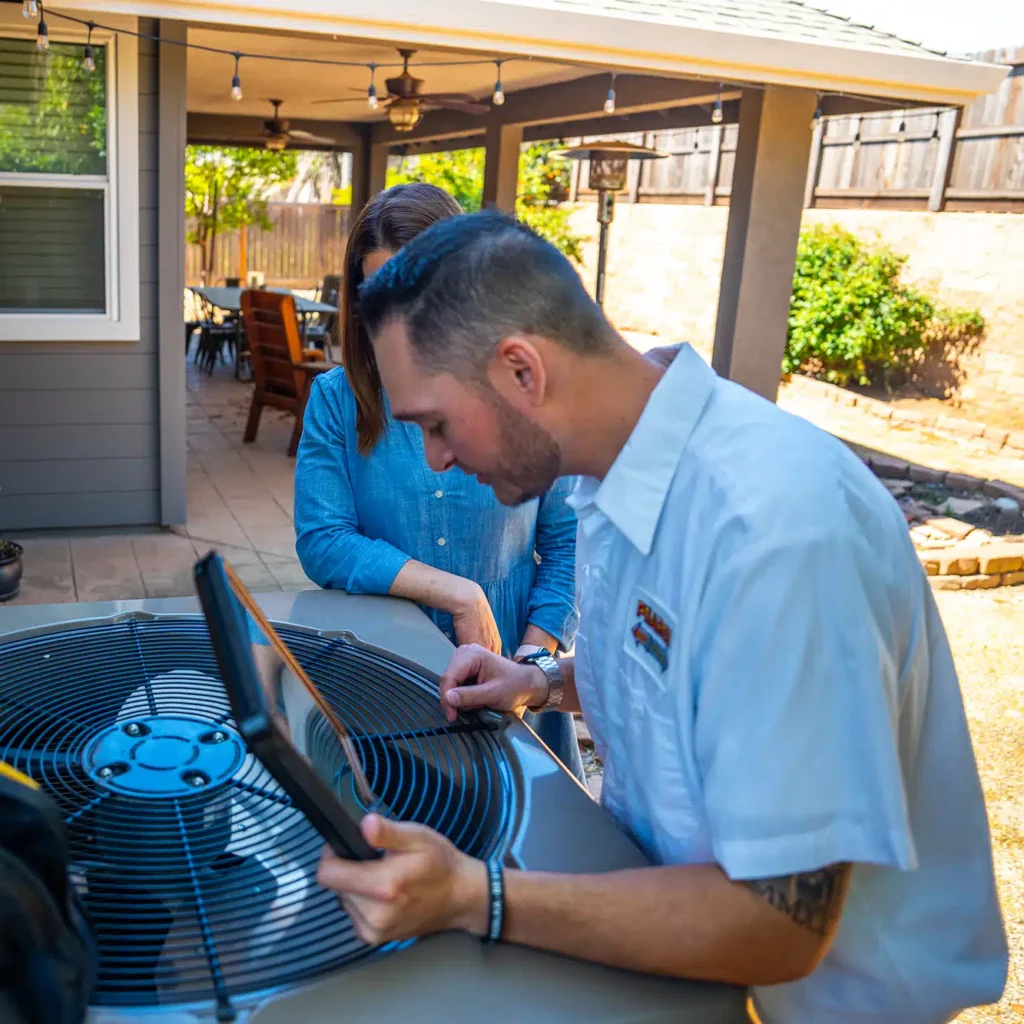
Climate around the home matters for air source units. In cold, windy spots a unit works harder, so a sheltered location helps. In the Sacramento Valley, summer heat is the bigger factor, and good airflow and some shade around the unit help it shed heat. Avoid placing it where runoff or heavy rain could pool, and keep it clear of trees or tall fences that could restrict airflow or trap debris.
For ground source systems, soil and drainage are key. Sandy or loamy soils transfer heat well, while rocky or clay-heavy ground can make digging harder and more expensive. A high water table or shallow bedrock can complicate or halt drilling.
If your property has underground tanks, old wells, or a septic system, have everything mapped so nothing is struck during digging. Some conditions, like steep slopes or very tight lots, can rule out ground source entirely. Before investing, it is wise to have a site survey to confirm whether your land suits loops or boreholes.
Common Pitfalls
One of the biggest mistakes is choosing the wrong system size. Too small, and the home never gets comfortable. Too big, and the unit short-cycles, wasting energy and wearing out sooner. Guessing at the heating and cooling load instead of measuring it leads to poor performance.
Rushing an installation invites missed details like local codes, soil tests, or future access for repairs. For ground source systems, failing to check for buried pipes or cables causes delays and added cost. Air source units can underperform when placed too close to walls or shrubs.
Look for experienced installers, ask for references, and plan for an install that may take several days or, for ground source, a couple of weeks. Many post-installation problems trace back to skipped steps like missing insulation, poor pipe joints, or blocked vents. If something seems off, check the settings and filters before calling for service.
Future-Proofing Your Home
Heat pump technology sits at the center of the shift toward cleaner, more efficient homes. As power grids move toward renewables, both air source and ground source heat pumps offer a way to cut carbon emissions and reduce reliance on fossil fuels. Because a single system handles both heating and cooling, it is a smart fit for a changing climate and energy market.
Paired with smart home controls and renewable energy, heat pumps help homeowners stay comfortable, save on energy, and get ahead of where home energy is heading.
System Integration
Heat pumps work with most existing home setups. Air source systems can often use a home’s current ductwork, which keeps the upgrade simpler and more affordable. Mini-split or ductless units are another option, especially in homes without ducts, delivering flexible, efficient heating and cooling without major renovations.
Ground source systems cost more upfront and need yard space for the loops, but they deliver even greater efficiency and can last around 20 to 25 years for the indoor equipment. More homeowners are also choosing to pair heat pumps with solar panels so their homes run on clean energy.
Hybrid systems, such as heat pump and furnace combinations, give homeowners a backup during unusual weather by switching between systems for the best performance. A smart filtration plan with MERV 8 to 13 filters does more than improve air quality; it protects system components and keeps airflow strong. Talking with a professional ensures the system fits both current needs and future upgrades.
The right guidance helps you avoid costly mistakes and get the most comfort and savings from your system.
Grid Resilience
Heat pumps can support grid resilience by shifting some electricity use away from peak periods. Paired with smart controls or utility demand-response programs, they can ramp up or down based on grid needs, which helps keep supply steady during high demand. In homes with battery or thermal storage, heat pumps work well alongside that stored energy to ease grid load.
By reducing dependence on fossil fuels, these systems also benefit the wider community and can help lower greenhouse gas emissions. As part of a network of distributed energy resources, heat pumps support a more flexible, reliable grid.
The benefit reaches beyond any single home. Widespread adoption would help speed the shift to cleaner grids.
Technological Shifts
Recent advances in heat pump design focus on higher efficiency, quieter operation, and longer life. Smart controls let homeowners fine-tune settings, often from a smartphone or home automation hub. Newer refrigerants are easier on the environment and can improve performance.
It helps to stay current. As the technology improves, newer models may offer more savings or suit different climates. Homeowners who plan for future upgrades, for example by choosing serviceable equipment, tend to get more value from their investment.
Conclusion
Air source heat pumps are a great fit for mild climates like ours and slot easily into most homes. Ground source heat pumps cost more upfront but offer steady, long-term savings and suit properties with room to dig. Both cut fossil-fuel use and lower carbon emissions. The right choice depends on your site, your climate, and your budget, along with your future needs and local codes. Some homeowners save more with local rebates, while others pick the system that fits a compact yard or tricky soil. Either way, both need proper maintenance to last. If you want a comfortable home and a smaller energy bill, weigh your options and talk with a local Pearce professional about the best next step for your home.
Frequently Asked Questions
What is the main difference between air source and ground source heat pumps?
Air source heat pumps draw heat from the outdoor air to warm or cool your home. Ground source heat pumps draw that heat from the ground instead. Both provide efficient heating and cooling; the difference is where they get the heat.
Which heat pump is more energy efficient?
Ground source heat pumps are generally more efficient. They rely on the ground’s stable temperature, which makes their performance more consistent, especially in harsh climates.
Are ground source heat pumps more expensive to install?
Yes. Ground source systems require digging or drilling to bury the loop pipes, which makes them more expensive to install than air source systems.
Which heat pump is better for the environment?
Both are environmentally friendly, but ground source heat pumps are typically a bit lower in carbon emissions. They use less electricity to run and offer a stronger long-term environmental benefit.
Can I install a heat pump in any climate?
Both types work in most climates. Air source heat pumps can lose some efficiency in extreme cold, while ground source pumps stay efficient even in severe temperatures. In the Sacramento Valley’s mild winters, air source systems perform well year-round.
How long do air source and ground source heat pumps last?
Air source heat pumps usually last about 15 to 20 years. Ground source heat pumps last around 20 to 25 years for the indoor equipment, with a ground loop that can last 50 years or more.
Is a heat pump system a good way to future-proof my home?
Yes. Heat pumps help future-proof a home by lowering energy costs and greenhouse gas emissions. They also support renewable energy use, which lines up well with where home energy is heading.