


Key Takeaways
- While R-22 contains chlorine and harms the ozone layer, R-410A has no ozone depletion potential but has a higher global warming potential. Regulators have phased out R-22 in favor of safer alternatives.
- R-410A runs at much higher pressures and uses synthetic POE oil, so systems and components must be specifically designed for it and cannot be interchanged with R-22 equipment.
- R-22 upgrades usually involve complete system replacement rather than a mere refrigerant retrofit, which increases energy efficiency and long-term reliability.
- When budgeting, homeowners need to balance higher upfront costs for new R-410A or lower-GWP systems against lower energy bills, fewer repairs, and regulatory compliance.
- Service technicians require training on higher-pressure R-410A service procedures, proper lubricant management, and correct pump down and charging to prevent safety hazards and equipment harm.
- The industry is headed in the direction of lower GWP refrigerants such as R-32, R-454B, and CO2. All parties should prepare for future regulation and consider systems supporting future refrigerants.
R22 is a hydrochlorofluorocarbon that was phased out due to its ozone-depleting properties.
In contrast, R410A is a hydrofluorocarbon with higher pressure and no ozone depletion.
Systems designed for R22 cannot operate with R410A without significant component conversion.
Which refrigerant you use depends on equipment age, regulations, and efficiency objectives when servicing or replacing.
R-22 vs. R-410A
R-22 and R-410A are the two main refrigerants in question for residential and light commercial systems over the last couple of decades. R-22 was the standard until regulations and environmental considerations pushed the industry toward R-410A, a blend of R-32 and R-125. Below we analyze chemical composition, environmental impact, operating pressure, energy efficiency, and lubricant requirements to provide a clear, practical comparison.
1. Chemical Makeup
R-22 is chlorodifluoromethane (HCFC-22). It contains chlorine atoms that damage the ozone layer. R-410A is a binary blend, mainly R-32 (difluoromethane) and R-125 (pentafluoroethane).
R-410A has zero ozone depletion potential, while R-22 does not. R-410A is a hydrofluorocarbon (HFC), which means it does not contain chlorine.
Comparison table of chemical ingredients for quick reference:
- R-22: chlorodifluoromethane (HCFC-22) — contains chlorine, ODP >
- R-410A is a blend of R-32 and R-125. It contains no chlorine, has an ozone depletion potential of 0, and a global warming potential of 2088.
R-410A’s high GWP (2088) matters for climate impact even as it spares the ozone layer. These fundamental distinctions drive handling regulations, equipment engineering, and long-term policy.
2. Environmental Impact
R-22 harms the ozone layer due to its chlorine. This is why it was targeted for phase-outs under the Clean Air Act and international agreements. R-22 production and import were phased down from 2010 and largely banned by 2020 in many countries, including the US.
R-410A has zero ozone impact but has a greater global warming potential than certain newer low-GWP options. The market is driven by regulation and international agreements toward refrigerants with both low ODP and GWP.
Pros and cons: R-22 has ozone harm and a declining supply. R-410A has zero ODP but a high GWP of 2088. Availability: R-410A is widely available. R-22 stocks are shrinking and becoming more costly.
3. Operating Pressure
R-410A operates at significantly higher pressures than R-22, which means that its components need to be rated for such. Introducing R-410A to an R-22 system is dangerous and will lead to compressor tears or bursts.
Higher pressure means better heat transfer and, in many cases, better cooling when systems are made for it. Always follow manufacturer instructions.
R-22 vs. R-410A retrofitting often involves swapping out key components to align with pressure and safety specifications. Do not try a direct refrigerant swap.
4. Energy Efficiency
R-410A systems generally provide improved efficiency over older R-22 units. Certain research demonstrates quantifiable seasonal energy-use gains. Greater efficiency can reduce bills and increase comfort.
New R-410A units tend to be more efficient, sometimes far more than current standards. For switching, anticipate a list of efficiency ratings to compare models and lifetime operating costs.
5. Lubricant Type
R-22 systems utilize mineral oil. R-410A needs synthetic POE (polyolester) oils. These oils don’t mix. Mixing can lead to poor lubrication, acid formation, and compressor burnout.
R-22 to R-410A conversion often requires replacing the compressor, evaporator, condenser, and potentially copper lines, so retrofit costs can be steep.
Homeowner Impact
Homeowner implications as the industry transitions from R-22 to R-410A. With the R-22 production and import phase-out, a lot of older systems will become more expensive to operate and fix. R-410A systems usually have a higher purchase price and deliver better efficiency and extended component life.
This shift impacts buying decisions, maintenance budgets, warranties, and long-term regulatory compliance.
System Compatibility
Systems designed for R-22 cannot simply be refilled with R-410A because R-410A runs at much higher pressure and uses different lubricants. Switching refrigerants without swapping the compressor, lines, and oil is a recipe for leaks, damage, and voided warranties.
Retrofitting an R-22 unit for R-410A is seldom feasible or economical. Labor, new compressors and compatible oil are often close to the cost of a new system and results are mixed.
For the vast majority of homeowners, swapping out an aging R-22 unit for a new R-410A or some other refrigerant system is simply going to perform better and be more reliable. Trade in your old R-22 units for the best cooling, the peace of mind of warranty coverage and serviceability down the road.
New systems meet factory specifications for pressure and oil, and technicians can find parts and service easier.
Important compatibility checks:
- System pressure ratings and component design limits
- Compressor type and oil compatibility
- Line-set diameter and thermal expansion device match
- Manufacturer warranty conditions and approved refrigerants
- Local codes and refrigerant handling regulations
Cost Factors
R-22 prices have increased as production and import have ceased and recycled stocks are scarce. That, in turn, boosts repair invoices for older units requiring recharge. Purchasing a new R-410A system has a higher up-front cost, driven by newer compressors and system components, but it usually decreases operating costs down the line.
Contrast the one-time replacement cost with years of maintenance and refrigerant purchases. New R-410A units can provide about 40% more cooling per compressor design than older R-22 compressors, helping to reduce run time and energy consumption.
With fewer gas recharges and less frequent major repairs, it reduces lifetime costs. Plan on a full system replacement, not just a refrigerant swap, and look for financing or rebate programs to break up the upfront cost. Recall any local incentives or energy-efficiency rebates to defray the purchase price.
Maintenance Needs
Old R-22 systems require parts repairs more frequently as parts wear and refrigerant becomes less available. Leaks might be more difficult and expensive to repair. R-410A systems tend to leak less and have compressors made of higher-grade materials so they’ll last longer with less service.
Routine maintenance is necessary for both varieties to maintain efficiency and lifespan. Cleaning coils, correcting refrigerant charge, changing filters, and conducting annual inspections enhance performance and prevent costly big failures.
Maintenance checklist:
- Check refrigerant charge and inspect for leaks
- Clean or replace air filters and coils
- Verify compressor oil type and level (where applicable)
- Test pressures, airflow, and thermostat calibration
- Review warranty status and service records
The Global Shift
The phaseout of HCFCs like R-22 to HFCs and newer options is now a worldwide, multi-decade endeavor motivated by ozone and climate objectives. R-22 is being phased out due to its ozone depletion and global warming potential. Several countries have already reduced the manufacture and import of R-22. The Montreal Protocol defines timelines for HCFC phase out with a target to fully phase out by 2030. That legal context renders R-22 more difficult and expensive to procure for servicing.
It’s governed by international rules and national enforcement as to how quickly things shift. The Montreal Protocol gives us the global target with each country establishing production, import, and use regulations. In some cases, regulators focus on enforcement, which accelerates transitions in new builds and commercial fleets. In other cases, enforcement is looser and so old R-22 systems hang out longer.
Here in the US, EPA actions and guidance have driven market moves. Where enforcement or policy signals deprioritize older refrigerants, manufacturers and service chains speed up transition to avoid future compliance risks.
R-410A became a popular retrofit and replacement alternative since it doesn’t damage the ozone layer and fit many existing system designs with relatively minor alterations. R-410A’s global warming potential is high, roughly 2,088, which is now a glaring liability as policy turns to restrict greenhouse gases. Newer, lower-GWP refrigerants like R-32, which has a GWP of approximately 675, blends like R-454B, and natural options such as CO2 are on the rise.
R-32 provides a substantial GWP drop compared to R-410A, but is slightly flammable (A2L). Equipment design, safety standards, and technician training therefore all need to adapt. R-454B is on a similar A2L trajectory with even lower GWP in certain blends. CO2 systems necessitate alternative pressure configurations but deliver ultra-low GWP and fit certain commercial and industrial applications.
The HVAC industry is reacting across design, manufacturing and servicing. Manufacturers revamp compressors, heat exchangers and safety for A2L refrigerants. Supply chains react by sourcing new refrigerant stocks and discontinuing R-22 manufacturing. Servicing expenses for aging R-22 gear have increased as refrigerant supplies constrict.
Repairs are more costly and total cost of ownership calculations have tipped toward early replacement. Now, training for technicians involves A2L handling, leak detection changes and system commissioning steps. Consumer education is part of the shift: buyers must weigh lower lifetime emissions and operating costs against upfront equipment changes and safety considerations.
System Design
System design has to consider refrigerant characteristics, pressure envelopes, lubricants and materials prior to selecting any component or planning a retrofit. R-22 cannot be replaced by R-410A, and vice versa. Units designed for one cannot effectively or safely use the other without substantial modifications.
Transition options influence energy consumption, environmental consequences, service behavior, and lifecycle cost.
Component Differences
R-410A compressors have thicker housings and different clearances designed to handle discharge pressures significantly higher than R-22. Valves and service ports are different sizes and seals. Many R-410A units employ larger suction and discharge passages to push the increased mass flow.
Even tubing wall thickness and brazed joint standards are different. Copper for R-410A lines tends to be heavier gauge to withstand the higher working pressure. R-410A components are designed to withstand higher pressure and to be more durable.
POE oil is used for R-410A systems and mineral oils are used for many R-22 systems. POE is more hygroscopic, so drier evacuation and tighter seals are needed. Using mismatched parts, such as an R-410A compressor in an R-22 coil, can lead to incorrect superheat, oil return issues, leaks, or total compressor failure.
Always consult manufacturer specs when replacing or upgrading components. If converting, replace the compressor, evaporator, condenser, and maybe the copper lines. Newer refrigerants such as R-32 and R-454B need their own dedicated designs because they operate at different pressures and need compatible lubricants and materials.
Installation Nuances
Specifically, installing R-410A systems requires tools that are rated for higher pressure and fittings that are sized to the refrigerant. Safety features are pressure-rated hoses, gauges, and protective gear. Technicians need to learn how to work with POE oil and stay dry.
POE binds water like a sponge and will rot system parts if it’s not completely evacuated. Correct charging and evacuation for R-410A are key. Pull a deep vacuum, check for no moisture, and charge by weight per manufacturer data.
Leak checks should be conducted at pressure and with methods approved for the particular refrigerant in use.
Best practices for installation:
- Verify system matches refrigerant type before service.
- Install pressure-rated hoses and fittings for R-410A and next generation refrigerants.
- Retreat to necessary micron level. Cross POE oil open exposure.
- Charge by weight; follow superheat/subcooling targets from manufacturer.
- Replace filter driers and seals when changing refrigerant type.
- Train techs on flammability and pressure differences for R-32/R-454B.
Compare major system components below.
| Component | R-22 systems | R-410A systems |
|---|---|---|
| Compressor design | Lower pressure housing, mineral oil compatible | High-pressure housing, POE oil compatible |
| Condenser/evaporator | Thinner tubing, different coil face area | Thicker tubing, larger mass flow handling |
| Service ports & valves | Smaller, R-22 rated | Larger, high-pressure rated |
| Tubing | Lighter gauge copper | Heavier gauge copper |
| Oil type | Mineral oil common | POE oil (hygroscopic) |
| Typical GWP | 1810 (R-22) | 2088 (R-410A) |
The Technician’s View
To technicians, the R-22 vs. R-410A split is a pragmatic, everyday reality that influences service decisions, parts inventory and customer recommendations. When a tech gets to a job, the initial thing is to verify refrigerant type. Older units usually use R-22 or Freon. New systems use R-410A. That check drives everything that follows: replacement parts, oil type, pressure limits, and whether a repair is even sensible.
Technicians like working on new R-410A systems. R-410A was designed for higher heat-transfer rates and systems built around it run cooler and more efficiently when properly installed and charged. These units use POE oil and different compressors and are found to function at higher pressures. Technicians plan for that by using gauges, hoses, and service valves rated for R-410A pressures and by checking system design pressures because R-410A operates well above the typical R-22 service levels.
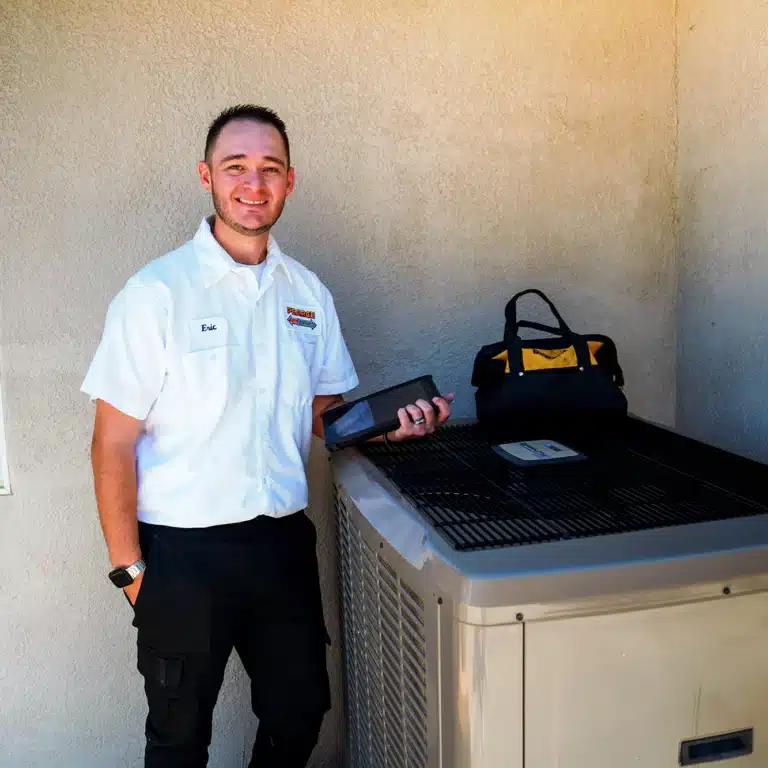
R-22 service presents challenges due to parts shortages and regulations. R-22 production and import were banned on January 1, 2020, so supply is shrinking and prices are volatile. When a leak or compressor failure rears its head on an old unit, repair costs can soar. Technicians compare the price of new components along with the required pounds of refrigerant, which is generally 2 to 4 pounds per ton of cooling capacity, versus replacement. More often than not, leaks or compressor issues nudge the suggestion to replace rather than fix.
A fundamental technical problem is oil incompatibility. R-22 systems utilize mineral oil. R-410A systems require POE oil. Those oils do not blend beneficially and replacing refrigerants without changing the oil and flushing the system can result in inadequate lubrication and premature compressor failure. Technicians never retrofit R-410A into an R-22 system without complete component replacement and meticulous oil management. They emphasize that R-22 and R-410A are not interchangeable, with improper refrigerant voiding warranties and potentially causing damage.
Lifelong training is essential for technicians. New refrigerant blends, updated safety protocols, and changing pressure standards mean technicians have to keep skills current. Training includes leak detection, oil handling, proper charging techniques, and EPA or equivalent handling certifications. Techs focus on homeowner education: explain benefits like higher efficiency and longer life with R-410A, and limitations like retrofit impossibility and rising R-22 costs.
Many technicians will recommend replacement over expensive repairs for older R-22 systems.
Beyond R-410A
R-410A has reigned in residential and commercial HVAC for years. Regulators and manufacturers are moving to refrigerants with less global-warming potential.
Overview: Beyond R-410A
New alternatives seek to reduce emissions, comply with upcoming regulations, and maintain system efficiencies. They impact everything from design and service practice to cost and safety standards across the industry.
R-32 and R-454B: practical low‑GWP alternatives
R-32, a single-component HFC difluoromethane, is more efficient and has a lower GWP than R-410A. It is easier to charge and recycle than blends. Many vendors already sell R-32 systems, particularly split/ductless units, as it hits a sweet spot of performance and cost with GWP cuts.
R-454B is a HFO/HFC blend with a GWP of circa 466 compared to R-410A’s 675, making it an obvious step down in climate weight. R-454B, retro and new equipment, typically provides comparable capacity with minor efficiency improvements. Both are being positioned as next-step replacements enabling systems to hit future regulatory targets.
CO2 and other non-flammable options
CO2 (R-744) is receiving notable interest in areas requiring high thermal lift and low environmental impact, including commercial refrigeration and heat pumps. CO2 performs well in transcritical arrangements and in cold climates, but needs higher operating pressures with different components.
CO2-based systems may be intricate and pricier initially, but they provide almost no GWP and are future-proof against the regulatory phaseouts impacting fluorinated gases.
Safety, equipment design, and A2L adoption
A2L (mildly flammable) refrigerants such as R-454B require equipment and code changes. All new equipment is being manufactured with leak detection, lower refrigerant charge thresholds, and listed components that reduce risk.
Manufacturers are issuing specific service procedures, and techs will require training and new PPE. These design modifications enable systems to maintain efficiency while controlling the minor flammability hazard.
Market outlook, availability, and what owners should know
R-410A will be available for years to service existing systems, and units installed in 2026 will be serviceable for their typical 15 to 20 year life span. Supply tightening is likely to buoy R-410A prices over time, ranging from $150 to $250 per pound long term.
That’s what makes low-GWP refrigerants so appealing to owners planning new installs today. HVAC pros and buyers should keep an eye on certifications, component listings, and regional code changes. They should also balance upfront cost, efficiency, and long-term serviceability when selecting refrigerant types.
Keep your training and product listings up to date for safe, compliant installs and repairs.
Conclusion
R-22 and R-410A deal with cooling very differently. R-22 is the lower pressure type that works in older gear. R-410A runs at higher pressure and requires newer components. R-22 has higher service costs and limited supply for homeowners. Technicians transition to R-410A and new blends that reduce ozone damage and increase efficiency. Universal guidelines drive the switch, and system designs have to align with the selected refrigerant. For a house upgrade, consider upfront cost, long-term bills, and part availability. For repairs, see if the system accommodates a swap or if it requires replacement. Choose what aligns with your budget and climate objectives. Set to test your unit or compare quotes? Have a pro examine and provide specific figures.
Frequently Asked Questions
What is the main difference between R-22 and R-410A?
R-22 is an outdated HCFC that harms the ozone layer. Unlike R-22, R-410A is a newer hydrofluorocarbon (HFC) with no ozone depletion potential and higher operating pressure for improved efficiency in new systems.
Can I replace R-22 with R-410A in my existing system?
No. R-410A operates at a higher pressure and needs different lubricants, seals, and components. Conversion requires a complete system retrofit or replacement for safety and reliability.
What does the phase-out of R-22 mean for homeowners?
Phase out makes R-22 more expensive and less available. Homeowners will pay more for R-22 repairs and will likely save in the long term by replacing systems with R-410A compatible equipment.
How does system design differ between R-22 and R-410A units?
R-410A systems employ compressors and heat-exchanger designs designed for higher pressure. They are usually more efficient and utilize synthetic lubricant, so parts aren’t compatible with R-22 equipment.
What should a technician consider when servicing R-410A systems?
Technicians now have to use tools rated for higher pressure, proper refrigerant recovery equipment, and correct oils. They need to adhere to safety standards and certifications for handling R-410A and leak tight service.
Are there better alternatives beyond R-410A?
Yes. Next-generation refrigerants, such as R-32 and low-GWP blends, provide less global warming impact and equal or better efficiency. Adoption is a regional and equipment compatibility issue.
How do environmental regulations affect my choice of refrigerant?
Laws restrict or prohibit high-ozone and high-global-warming refrigerants. Choosing low-GWP equipment future-proofs your system, lowers operating risk and may be eligible for incentives or rebates.