


Key Takeaways
- They work best in households with predictable routines, employing their set schedules to save energy and provide simple reliable control that doesn’t require an internet connection.
- Smart thermostats offer more flexibility and energy savings potential with sensors, learning algorithms, remote app and voice control, and smart home ecosystem integrations.
- Go programmable if you want the lowest initial cost, easiest installation, and physical controls. Go smart if you want automation, remote access, and detailed energy reports.
- Ensure compatibility pre-purchase by verifying your HVAC system needs, C-wire availability for power, Wi-Fi access, and preferred smart home integrations.
- Balance cost and value. Compare the higher up-front price of smart thermostats with potential long-term savings, rebates and convenience.
- Pair the thermostat to your household routine, technological comfort, and desire for automation or manual control for the optimal balance of comfort and efficiency.
Programmable vs smart thermostat which is better answers the choice between timer-based control and cloud-connected, learning devices. A programmable thermostat establishes predetermined timetables to reduce power consumption based on consistent habits.
A smart thermostat learns your habits, can be controlled remotely, and provides energy usage reports through an app. The choice between programmable and smart thermostat depends on your budget, tech comfort level, and desire for automation versus manual schedules.
The remainder of this post compares cost, features, and real-world savings.
The Core Differences
Programmable thermostats use schedules that you program manually for various times and days. Smart thermostats leverage sensors, connected data, and automation to shift temperatures based on presence, forecasts, and learned daily patterns. Here’s how those design decisions impact control, savings, cost, usability, and integration.
1. Control
Programmable versions allow you to program temperature settings for blocks of time, such as cooler at night, warmer in the morning, and different settings for weekdays and weekends. You have to punch in those schedules on the device and adjust manually for vacations or seasonal changes.
Smart thermostats add occupancy sensors, geofencing, and learning algorithms that adjust settings on their own when people depart or return. They could use local weather data to preheat or precool a home. Manual adjustments are still feasible, but instead of pushing buttons, most users tweak settings via app or voice command.
A programmable thermostat’s manual dial or keypad is straightforward. Smart models allow you to talk to a voice assistant or open an app and adjust temperatures on the fly. Remote access gives smart thermostats flexibility. You can adjust the temperature from work, a trip abroad, or a hotel room with an internet connection.
2. Savings
Both types cut energy waste relative to a manually controlled, non-programmed thermostat. Smart thermostats generally provide bigger increases. Programmable thermostats assist when users adhere to schedules. They reduce waste primarily during foreseen absences.
Smart thermostats monitor usage, provide reports, and recommend adjustments. They can save up to 26% on heating and cooling energy in some studies because they adapt automatically to behavior and weather. Programmable units yield small savings associated with proper schedule implementation.
| Type | Typical annual energy savings |
|---|---|
| Programmable | 5–15% (varies by use) |
| Smart | Up to 26% with adaptive features |
3. Cost
Programmable thermostats tend to be low-cost, often in the 20 to 60 range. Smart thermostats run about 100 to 250. Though smart models typically have higher upfront costs, they can be amortized over time by higher energy savings and intermittent utility rebates for ENERGY STAR rated units.
Think regional subsidies and lifetime use when looking at prices. The core differences.
4. Usability
They’re simple to install and ideal for low-tech patients. They usually don’t play well together depending on model and HVAC wiring.
Smart thermostats walk users through app-based setup, support firmware updates over the internet, and learn preferences. Last-minute schedule changes are less painful with remote controls and automation. You can change settings without even touching the device.
5. Integration
Smart thermostats connect to ecosystems such as Amazon Alexa, Google Assistant, and Apple HomeKit and can utilize remote sensors for zone comfort. Programmable thermostats typically don’t integrate, restricting automation and cross-device habits.
Make a compatibility list when selecting models to be sure they work with your existing smart home devices.
The Programmable Option
Programmable thermostats enable you to program temperatures for different times of the day, which makes them ideal for families or individuals with consistent weekly schedules. They see the entire home as one zone, so you choose one schedule for the living area as opposed to managing each room independently. For the typical 9 to 5’er, the device can reduce temperature overnight, increase it in the morning, reduce again during work, and warm up the house right before you get back.
That pattern repeats unless you alter it, so once programmed, the thermostat follows the same schedule every day. Week and weekend schedules can be scheduled separately by the user. You could program cooler nights and warmer mornings during the week, then a lazier schedule on the weekends with later wake time.
The unit allows multiple set points per day, commonly four: wake, away, return, and sleep, so you can match temperature to activity. For example, set 18°C at night, 21°C at wake, 16°C while away, and 20°C in the evening. Those hard-wired set points eliminate the need to adjust the thermostat multiple times a day.
Programmable doesn’t require wifi or an app to function. That independence boosts reliability because schedules run locally on the device and do not rely on internet service or cloud servers. In places where connectivity is sporadic, or for users who don’t want to connect home systems to the web, that’s a definite plus.
The interface tends to be simple. Basic buttons and an on-device display keep the learning curve shallow. For a lot of families, that straightforwardness translates into less troubleshooting and more consistent behavior. Cost is pragmatic. Programmable thermostats tend to be a cheap option relative to networked smart models.
For simple heating and cooling, keeping you comfortable during working hours and dialing it back when you’re away, programmable units provide value without the premium of sensors, voice assistants, or subscriptions. They can still contribute to energy savings by dropping set points during unoccupied hours or overnight, decreasing HVAC run time.
Programmable thermostats allow for manual control, with no automation. They don’t figure out habits or adjust to weather on their own. If you desire precise, repeatable schedules and small tech overhead, they suit. If your household patterns are predictable and you want a device that just executes a plan you lay out, the programmable option is sensible, transparent, and cheap.
The Smart Alternative
Smart thermostats take basic temperature dial control and add a bunch of features designed to make home comfort easier and energy consumption more transparent. They learn schedules, adjust for fluctuating temperatures inside and outside, and provide energy monitoring so you can monitor exactly how much you use and when. Most models provide live weather alerts, recommend setpoint adjustments, and feature a vacation mode that maintains efficient settings while your home is vacant.
These features assist homeowners in identifying waste and crafting minor, data-driven adjustments that accumulate.
The Smart alternative Smart systems allow you to modify settings remotely. With mobile apps and voice control, you can start to raise the heat on your commute home or trim cooling while at the office. Remote access supports multiple users and provides temporary control for guests or service personnel without requiring on-site presence.
That convenience pairs with automation: occupancy sensors, geofencing, and adaptive schedules reduce the need for manual tweaks and can prevent energy waste when rooms are unoccupied.
The smart alternative is that energy savings come from automation and better data. Real-time energy monitoring and usage reports reveal patterns and inefficiencies. According to ENERGY STAR, smart thermostats can save about 8% on heating and cooling, which for a home spending approximately $1,200 a year for climate control equals $180 to $312 saved every year.
With normal payback periods in the 8 to 12 month range, that higher upfront cost often returns in a relatively short time. Upfront prices typically fall in the $100 to $250 range, above the bare-bones programmable units but in line with other mid-range smart devices.
Installation and compatibility require consideration. It’s worth noting that the smart thermostats need a C-wire to provide constant power. Older homes might not have that wire, and running one or utilizing a power adapter increases installation complexity or expense.
Plan for integration: smart thermostats work best inside a larger smart-home system where they can talk to sensors, lights, and voice assistants. Integration allows scenes and cross-device automation that cut energy consumption and increase comfort.
Complexity is a compromise. Most users love the set-and-forget savings, but others note that smart units can be trickier to run than plain programmable versions. They frequently require an app, an account, and periodic firmware updates.
For tech-forward owners or anyone who already has a connected home, smart thermostats provide obvious advantages. For those who like to push a button, a programmable thermostat might still be the better option.
Installation and Longevity
Installation is generally quite simple, and programmable thermostats will work with most central HVAC systems. They have straightforward wiring and uncomplicated controls, so a homeowner can typically take out the old unit, screw in the new one, and make the one-to-one wire connections in around 20 minutes. Several models utilize the same terminals as older mechanical or digital thermostats, so DIY replacement is realistic with a simple tool kit and a snapshot of the existing wires.
Programmable units have been available for decades, and their shape lends itself to easy installation and longevity. Smart thermostats often require a dedicated power line or C-wire and even occasional professional installation, particularly in older homes. Yes, many smart models feature step-by-step guides that enable a seasoned DIYer to complete the install in roughly 15 minutes, but the snag is power.
Certain systems are missing the common wire that provides uninterrupted 24 V power and without it your smart thermostat might require a C-wire adapter or an expert to install the conductor. Older HVAC control boards, multi-stage systems and heat-pump configurations can complicate a self-install. For homeowners that are unsure about wiring, paying a technician up front eliminates warranty voids and miswiring that can fry controls.
Both types of thermostats can last for years with routine maintenance. Programmable thermostats are basic electromechanical or rudimentary digital affairs and can last 7 to 10 or more years if maintained clean and dry. Smart thermostats, while more complicated, generally achieve comparable lifespans. Their software updates can prolong utility by introducing features or patching bugs, but hardware typically endures 5 to 10 years depending on how they are used and environmental conditions.
Simple upkeep such as routinely checking connections, dusting on occasion, and keeping the device at temperatures recommended by the manufacturer can extend the life for either.
Common installation requirements and longevity tips:
- Programmable thermostat
- Tools: screwdriver, level, and wire labels.
- Time: approximately 20 minutes for simple one-to-one wiring.
- Cost: $20 to $60 upfront.
- Tip: Photograph wiring before removal and keep contacts clean.
- Longevity: 7 to 10+ years with basic maintenance.
- Smart thermostat
- Tools: screwdriver, smartphone for setup. C-wire may be needed.
- Time: Approximately 15 minutes with guide for compatible systems. It may take longer if C-wire work is required.
- Cost: $100 to $250 upfront. There is potential payback from energy savings.
- Tip: Confirm C-wire compatibility before purchase. Consider professional installation for older homes.
- Longevity: 5 to 10 years. Software updates can extend useful life.
While most homeowners can tackle a thermostat install with a screwdriver and a drill, C-wire and system compatibility checks determine if the DIY path is realistic.
The Human Factor
Deciding between a programmable and smart thermostat starts with how we live and use heating and cooling. Customize the thermostat based on family habits, comfort preferences, and daily schedule. For example, if you wake at the same time, leave for work, and return on a consistent schedule, a programmable unit with defined blocks of time can capture savings without ongoing attention.
If your days vary, a smart thermostat that detects presence or learns your schedule can eliminate manual adjustments and late night mistakes. Programmable thermostats are fine for users with regular schedules. They allow you to configure temperature steps for various times of day, which is great for one- or two-person households with reasonably consistent schedules.
A plain four- or five-block daily schedule is a snap to establish and grasp. For instance, lower temperatures during the work day and increase them prior to people arriving home. Human error remains a risk: forgetting to enable an away program or setting the wrong temperature undoes the benefits. This is why one-touch controls and pre-made schedules are so useful; they minimize errors and make the device more likely to be used properly.
Smart thermostats adapt when schedules change. They can sense when a home is unoccupied, discover when people traditionally arrive, or allow remote users to adjust settings by phone. This lowers the likelihood someone leaves the heat on accidentally and comes in handy during holidays, guests, or travel days.
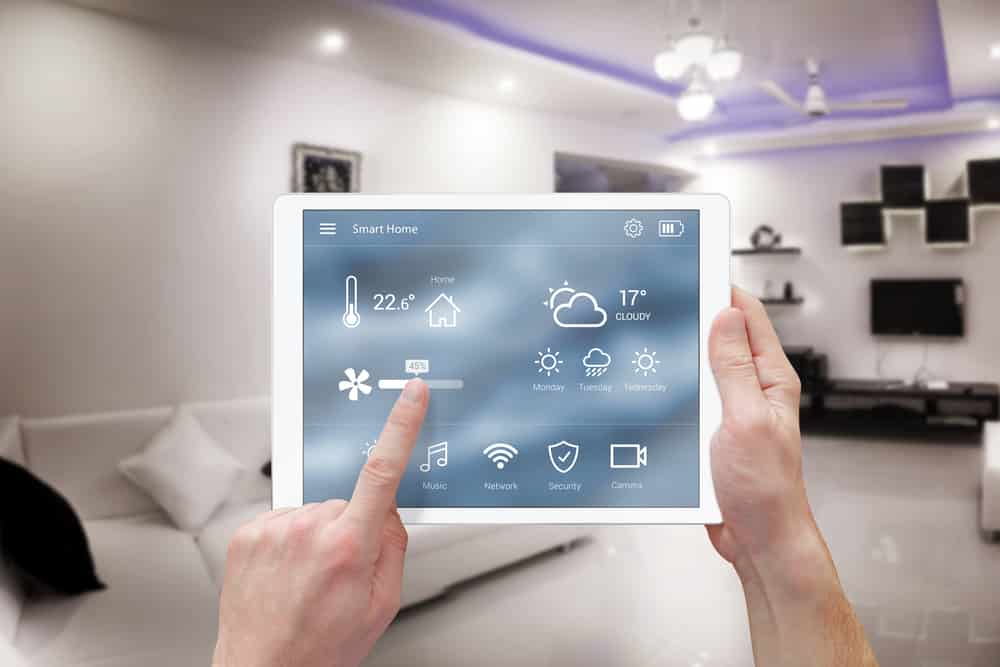
A clever device can send a super-fast alert to one family member in a bustling house so that everyone coordinates, saving hours of depleted effort. Complexity presents a barrier. If your family finds the interface confusing, you’ll never use the advanced features and the unit is little better than a manual thermostat.
Ease of use and comfort with the technology should be your guide. A few homes crave set it and forget it simplicity. Others crave automation and will learn apps and integrations. Consider household size and special needs. Homes with young children or older adults may value immediate, simple controls and clear feedback over many automated options.
Tech-impaired people might worry about underusing smart features, thereby diminishing savings. Hands-on counts. A user who pokes around adjusting settings will frequently eke more savings with a transparent, simple interface. Hands-off system people benefit more from a learning or auto-adjusting thermostat.
Usability, of course, is quirky and non-objective — it’s different for everyone — and the right pick balances ease with required automation and the real-life behaviors of the users who will bump the thermostat daily.
Making Your Choice
Start by checking three basic things: your HVAC system type, your Wi-Fi strength where the thermostat will sit, and which smart platforms or devices you already use. Older HVAC systems might require a common (C) wire for most smart thermostats. If that is absent, you can either add a wire or opt for a model that uses a power adapter.
Measure the Wi-Fi signal at the thermostat. A weak signal can break remote control and cloud functions. Consider if you want it to work with voice assistants, home hubs, or certain apps so you know the compatibility before purchase.
Compare initial price to ongoing benefit. Programmable thermostats often are less expensive to purchase and install. Entry-level and most basic models go for less than $150 to $250, while smart models with learning capabilities and big touch screen displays usually hover at or above the $150 to $250 range.
Weigh that against likely savings: modest devices may deliver roughly $35 to $45 per year in heating savings for well-used systems. Smart thermostats that learn your occupancy, patterns, and weather forecasts can increase savings over time by shifting setpoints while you’re away or sleeping.
Think about how long you intend to own the home. The longer you’re in the home, the better an argument there is for spending more upfront.
Consider how you live. If you have a very regular weekly schedule, a clear weekly schedule programmable thermostat may fit you well and deliver predictable savings. If your days are irregular or you have a lot of travel, then a learning thermostat or one that uses geofencing and weather data to set your heating will likely maintain comfort while minimizing waste.
Remote control is useful if you want to adjust the temperature from the office or on the road. Many internet-connected units let you make live adjustments from a phone and can even pull real-time and historical weather data to optimize operation.
Think convenience and integration. Intelligent models can report energy usage, pop-up warnings for extreme temperatures and integrate with other smart home devices for scenes or safety triggers. Programmables provide robust schedule management without cloud reliance, which certain users favor for confidentiality and stability.
Installation can be tricky. The less complex and more programmable units usually involve minimal installation and a few steps in an app.
Checklist: Confirm HVAC compatibility and C-wire. Test Wi-Fi at the stat site. Write down your desired integrations (voice, hub, app). Choose between schedule control and adaptive learning. Place a budget and weigh model prices against projected yearly savings. Check remote access, weather-based features, and rate installation skill or pro level.
Conclusion
How to choose between a programmable vs smart thermostat – it all boils down to clear needs and real habits. Programmable models offer consistent control and low cost. They suit those with fixed schedules who desire an easy installation. Smart models learn your patterns, provide remote control and connect to apps and voice systems. They fit those who travel, have changing schedules, or desire granular energy feedback. For a tiny house and a rigid daily schedule, a programmable unit does the trick. For a busy household or a tech-forward user who desires remote checks and auto tweaks, a smart unit rewards over time. Consider budget, wiring, and how frequently you change your schedule. Let’s get you one picked out! Audit your lifestyle, verify compatibility, and test a model that fits your schedule.
Frequently Asked Questions
What is the main difference between a programmable thermostat and a smart thermostat?
Programmable thermostats execute pre-approved temperature routines. Smart thermostats learn, self-adjust and connect to the internet for remote control and data-powered optimization.
Which type saves more energy?
Smart thermostats tend to save more energy. They adjust to occupancy, provide remote control, and use learning and geofencing to cut waste beyond fixed schedules.
Are smart thermostats harder to install than programmable ones?
Mostly not. Both can be DIY. Smart thermostats might require a C-wire or a common-wire adapter, as well as Wi-Fi setup, which means a minor extra installation step.
Do smart thermostats respect my privacy?
Almost all vendors track usage data. Read the privacy policies. Select brands that you trust with transparent data policies and provide an ability to opt out of data sharing to protect your privacy.
Which is better for renters or short-term homes?
Programmable thermostats are great for short visits. Smart thermostats have their own advantages but need Wi-Fi connectivity and usually a user account, which can make temporary deployments tricky.
How long do these thermostats last?
Both have lifespans of 7 to 15 years or so. Smart thermostats can have firmware updates that add features, allowing smart thermostats to live longer than hardware alone.
Can a smart thermostat work with all HVAC systems?
Not necessarily. The majority of smart thermostats are compatible with typical systems, such as forced air, heat pumps, and gas or electric. Check compatibility with your HVAC type before purchasing.