
Key Takeaways
- Key cost influencers are unit and system size, labor prices, HVAC state and ductwork accessibility. Consider them all to determine a practical installation budget.
- Be sure to select the appropriate type of unit for your HVAC setup and home size. Steam models come with a higher upfront price point but provide greater efficiency. Drum or reservoir units are less expensive upfront but require more maintenance.
- There are often hidden costs such as permits, duct or electrical work, or plumbing. Get a written estimate with these items detailed and incorporate them into your total budget.
- Whole-house vs. Portable — Whole-house systems are pricier upfront, but they deliver consistent coverage, have lower long-term operating costs, and require less direct maintenance.
- Save money by shopping around for quotes, scheduling installation during the off-season, bundling with other HVAC projects and exploring rebates and incentives.
- Trust a licensed HVAC technician to professionally install and test your system after installation to prevent moisture issues, safeguard warranties, and ensure longevity.
About whole house humidifier installation cost. Average costs run from 300 to 2,000 EUR depending on unit type, labor, and home size.
Prices encompass the humidifier, ductwork or bypass kit, electrical connections, and sometimes water line work. Installer rates, needed repairs, and maintenance plans influence final price and project timeline.
Cost Breakdown
Whole-house humidifier installation cost is based on a few discrete factors that come together to form the final figure. Here are the prime cost drivers to consider prior to budgeting for a system.
- Unit type (bypass, fan-powered, steam, drum)
- System size and home square footage
- Labor rates and local market pricing
- HVAC compatibility and system condition
- Ductwork access and required modifications
- Additional components (humidistat, evaporative pads, hygrometer)
- Maintenance and annual service
1. Unit Type
Bypass, fan-powered, and steam units are the typical whole-house choices. Average unit prices range from approximately $400 to $1,200 for the majority of contemporary bypass and fan-powered systems. Steam units are at the higher end and can surpass that based on capacity.
Drum humidifiers are the least expensive, typically $100 to $300, but require regular cleaning and have an increased likelihood of mold. Steam humidifiers require a greater initial investment but provide more accurate control and typically greater efficiency, which can reduce energy loss in the long run.
Drum and reservoir models are the opposite, saving money upfront but increasing maintenance and replacement part expenses. Match unit type to your HVAC system: bypass models tie into return-air ducts, fan-powered units need space and a blower, and steam models require water and electrical supply.
2. System Size
A bigger home requires a larger-capacity unit, which increases the purchase price. Undersized humidifiers will run non-stop and still not hit desired humidity, while oversized models can short-cycle and waste energy.
Use a sizing calculator or installer with a sample estimate to determine the appropriate gallons-per-day capacity for your square meters. The right sizing maintains an even humidity between rooms and prevents dry wood, cracked paint or static problems.
3. Labor Rates
Labor is a large slice of the bill, as much as 50% of overall cost. Professional installation runs an average of 392 to 768 in many markets, and total labor could be between 100 and 1,000 depending on complexity.
Skilled HVAC techs cost more, but they eliminate the risk of bad installation and breakdowns down the road. Get several bids from licensed companies to compare.
4. HVAC Condition
Older or incompatible HVAC systems may require upgrades before humidifier hookup. Putting it on tired parts threatens damp issues and expensive repairs.
Checking out furnace, blower, and duct seals prior to work avoids surprises and safeguards the humidifier’s lifespan. A solid HVAC base underpins efficient operation and reduces operating costs over time.
5. Ductwork Access
Hard-to-reach ducts add labor hours and materials. Longer complex duct runs may require additional sleeves, panels, or modifications.
Bypass ducts or simpler layouts are installed faster and cheaper. Get a sense of the duct layout early to establish a realistic expectation.
Unseen Expenses
Unseen expenses are the expenses that don’t show up in the quote and can impact the final bill for a whole house humidifier installation. These include necessary permits, home alterations, electrical and plumbing, ongoing operation and maintenance, and associated health or remediation costs. By budgeting for them, you keep your project predictable and reduce the likelihood of sticker shock.
Common hidden costs:
- Permit fees and inspection expenses.
- Ductwork or bypass system updates.
- New wiring, breaker or conduit work.
- Plumbing lines, valves or condensate drains.
- Replacement pads or filters, which cost between $10 and $50 each, installed.
- Humidistat or automation units, which range from $30 to $150.
- Higher operating costs, with steam units costing between $150 and $500 per year.
- Mold testing and remediation, with testing costing around $600.
- Labor mark-ups, as labor can be as much as 50% of total.
- Replacement of the unit later, which can cost between $400 and $1,500.
Permits
Other cities issue permits for installing a whole house humidifier and those permits increase the overall expense. Permit fees differ substantially by jurisdiction, work extent and equipment type, with minor fees in the low tens and some larger ones in the hundreds.
Permits guarantee that the work complies with local code and that the installation will be safe and able to be inspected, limiting your liability and insurance problems down the road. Don’t forget to budget for the permit costs or ask your HVAC contractor which permits they will pull.
Modifications
Typical fixes are to upgrade ductwork, install a bypass system or resize plenums to achieve uniform humidity. New humidistat controls, zoning integration, or smart-home automation can require extra wiring and control modules and will increase prices.
Big home or HVAC modifications, like relocating the air handler or cutting access panels, can spike the total. Go over any modification requirements with a seasoned HVAC professional before you sign and receive written quotes for every potential adjustment.
Electrical
Electrical requirements checklist:
- Dedicated circuit and breaker for steam units
- Properly sized wiring and conduit
- Ground-fault protection where required
- Space for a control transformer or relay
- Connection to humidistat or home automation
Engaging a licensed electrician for new wiring or upgrades adds to the cost and guarantees safety and code compliance. Good electrical infrastructure enables streamlined operation and prevents annoying shutdowns or danger.
Add in electrical work for that early quote so you get the whole project picture.
Plumbing
Connecting the humidifier requires a water supply line, shutoff valve and drain or condensate connection. Steam and reservoir models usually necessitate plumbing by a professional to avoid leaks and maintain appropriate pressure.
Bad plumbing can lead to water damage and mold, as well as reduced efficiency, which are unseen expenses that could require testing or remediation for approximately $600 for mold testing. Set aside for plumbing and ongoing maintenance to identify small problems before they become major repairs.
Long-Term Value
A whole-house humidifier is a long-term value. It pushes indoor moisture to a consistent level, which shifts the feel of a home and the operation of systems. Here are obvious places that value manifests over years of ownership.
Energy Efficiency
Modern whole-home humidifiers consume very little electricity relative to other HVAC components. Bypass and fan-powered models rely primarily on your furnace blower, while high-end steam appliances pull additional power only as required.
Steam humidifiers and systems combined with smart humidistats modulate output to real-time demand, preventing excess. When indoor air is sufficiently humid, it will feel warmer at the same thermostat setting, and you can get away with lowering heating setpoints a few degrees but still be comfortable.
This can reduce heating energy consumption over a season, particularly in cold and dry climates. Selecting Energy Star-rated or high-efficiency models lowers operating costs and enhances payback. For example, a home that lowers the thermostat by 2°C through humidification may see modest fuel savings over months, and a smart humidistat that reduces run time during milder nights shrinks electricity use.
Health Benefits
Keeping suggested humidity (typically 30-50% RH) alleviates symptoms associated with dry air. They say they have less dry eyes, less skin flaking, and less nasal irritation than when humidity fluctuates.
Regular moisture can decrease airborne particle suspension, potentially decreasing allergy flare-ups and making it easier to breathe for those who suffer from allergies. Other research has found that high or even moderate humidity could restrict the lifespan of some viruses on surfaces and in air, although it is not a silver bullet for infection control.
For families with young kids, the elderly, or those with persistent respiratory problems, this consistent advantage can often be worth the price. A whole-house unit provides uniform moisture throughout, rather than portable units that address individual rooms.
Home Preservation
Wood floors, trim, and furniture react to ambient moisture. Too-dry air makes it shrink, gap, and crack. Too-wet air can warp or mold it.
With correct settings, whole house humidifiers maintain wood in equilibrium moisture content, minimizing cosmetic and structural damage. It snips static shocks, a boon to electronics and textiles.
Over ten years or more, not having to do small repairs to flooring and finishes saves home value. Since many whole-house humidifiers last for 10 years or more, avoiding that slow destruction becomes a tangible saving.
Ongoing Maintenance
Routine tasks keep the system efficient. Replace water panels or filters seasonally, clean reservoirs, and flush lines as directed. Certain models require more regular maintenance.
Evaporative pads generally get replaced once every heating season, whereas steam units don’t need to swap out the pads as often, but do need descaling from time to time. An annual inspection from a licensed HVAC technician like Antoine catches issues early and extends service life.
If well maintained, many last well beyond ten years, so upkeep expenses are manageable and predictable relative to replacing or fixing damaged parts of the home.
Investment Comparison
Whole-house humidifier investment varies based on device type, home size, and installation complexity. Here’s a quick comparison of average price ranges, coverage, and maintenance between portable and whole-house options.
| Option | Typical price (currency) | Coverage area | Maintenance needs |
|---|---|---|---|
| Portable units | 40–300 | Single room or small open area | Frequent refills, weekly cleaning, filter changes every 1–6 months |
| Whole-house systems | 400–1,200 (unit) + 300–1,500 (installation) | Entire home (depends on HVAC capacity) | Periodic filter/pad replacement, annual check, low manual intervention |
Portable Units
Portable humidifiers fit single rooms and are simple to purchase and relocate. They cost a lot less up front, typically below 300 dollars, but that lower initial price masks a recurring cost. Daily or every few days refills are typical for bigger rooms, and tiny units may require topping twice a day in arid climates.
Filters or wicks need to be replaced on a schedule, sometimes monthly, contributing to lifetime cost. Manual cleaning to prevent mold and bacteria buildup is required, and ignoring this diminishes the indoor air quality advantage.
Portable models don’t disperse moisture across multiple rooms, so you might require several units to get near whole home coverage, which increases both clutter and operating cost.
Whole-House Systems
Whole-house systems connect into the main HVAC and moisten the entire ducted area. They are available in various technologies. Steam, evaporative, and bypass types vary in price and water consumption.
Total cost is influenced by your technology choice, the capacity needed to cover your home’s square footage, and the installation difficulty. Unit cost averages between 400 and 1,200. Professional installation can range from 400 to 1,500 and increase by 300 to 700 if HVAC needs alteration. Labor can be as much as 50% of project cost.
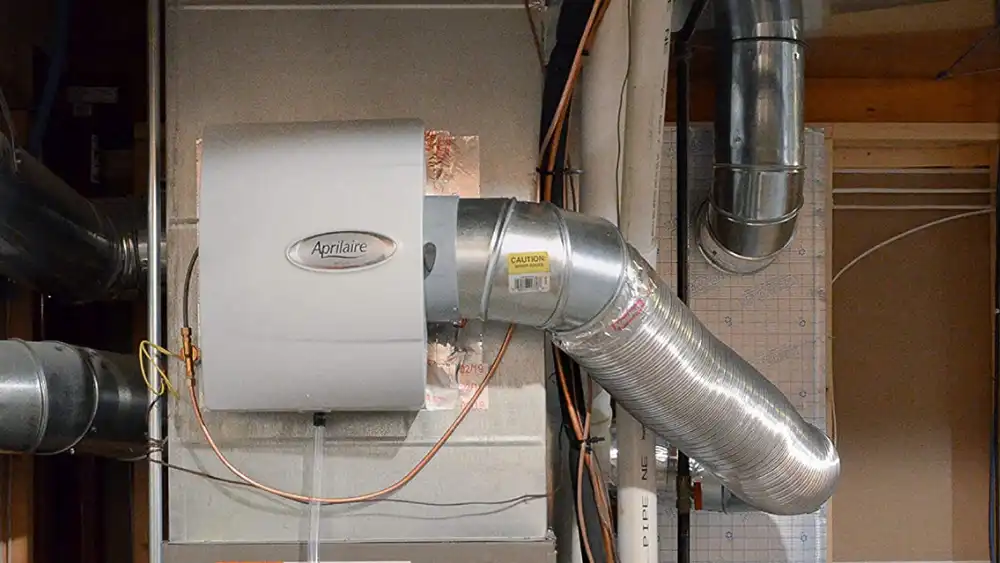
Integration provides consistent humidity between rooms, increasing comfort and warmth and frequently enabling lower thermostat settings, delivering significant winter energy savings. Humidistats or smart controls make operation simple and keep levels optimal.
With routine maintenance, a whole-house humidifier can have a service life of 10 years or beyond, so a higher initial investment dilutes across a longer lifespan and typically has a lower operational cost per square meter than several portable units.
Comparative Points
Portables bring the cost of adoption down and increase ongoing maintenance and partial adoption. Whole-house systems demand increased upfront investment and a professional technician and provide consistent dehumidification, reduced manual upkeep, and overall greater long-term return on investment for whole-home comfort.
Smart Savings
Whole-house humidifier installation is a relatively small investment that returns dividends in comfort, energy savings, and reduced home repairs. The smart way saves initial price and reduces maintenance. Here are actionable strategies to minimize installation cost, then targeted tips on rebates, timing and bundling.
- Download multiple quotes and compare line items. Get three or more detailed quotes from licensed HVAC companies, including labor, equipment, warranty, and permit fees. Request itemized pricing to help you identify markups or extraneous services. Verify company credentials, customer feedback, and whether installers are factory-trained on your humidifier model. A cheaper bid might skip critical steps that increase repair expenses down the road.
- Find the right humidifier for your home. Systems include simple bypass units to fan-powered or steam. Costs range anywhere from around 400 to 1,200 or more depending on type and automation. Bypass and fan-powered units consume very little energy, usually a few pennies a day, so use cost is low. Choose features only if they provide tangible benefits, like automatic humidistats or UV filters.
- Time the install for off-peak times. Book during the slower HVAC seasons to receive lower labor rates and quicker service. Off-season specials can feature discounted equipment and installation. Demand surges in the fall and winter when homeowners are after warmth, stat. Prices and lead times can soar then. Shop early to get the best deals.
- Piggyback with other HVAC work. Smart Savings – Save when you pair humidifier installation with furnace service, duct cleaning, or AC work. Most places have package deals and easy scheduling. Bundling cuts down on overall work and minimizes commotion in the house. DEAL: Request bundled quotes to save.
- Monitor rebates and incentives. Check for utility or manufacturer air conditioning efficiency rebates. Certain programs may require certain models or demonstration of professional installation. Rebate programs vary by season. Check eligibility prior to purchase and factor anticipated rebates into your shopping budget.
Rebates
| Rebate Source | Eligibility | Typical Savings |
|---|---|---|
| Utility company programs | Energy-efficient model, professional install | 50–300 |
| Manufacturer promotions | Specific brand or serial registration | 25–200 |
| Local/state efficiency incentives | Meet efficiency criteria, submit application | Varies |
Qualifying frequently involves purchasing specified energy-efficient or brand name models and retaining receipts. Programs change, so check before you buy. Just be sure to factor the rebate into the net cost to see the true payback.
Timing
Plan installs in slower months to reduce labor rates. Fall and winter are when demand spikes, which can increase rates and lead to longer waits. Smart Savings: Book in advance to guarantee technicians and the best rates.
Smart savings: Time it with other home projects so you save on mobilization and logistics.
Bundling
Smart Savings — ABUNDANCE, NOTHING LIKE SMART SAVINGS bundling humidifier work with furnace or AC upgrades can earn package discounts. Others provide discounts on bundled projects, reducing labor and materials expenses. Bundling minimizes service calls as well.
Of course, always ask for bundled quotes — it’s the easiest way to shop for value and manage projects.
Installation Integrity
Installing a whole-house humidifier properly is essential for safe efficient operation and to safeguard the rest of the HVAC system. A licensed HVAC technician has the training and tools necessary to custom-fit the unit to your ductwork, make safe electrical and water connections, and program controls so the humidifier operates in conjunction with your furnace or air handler. Labor can comprise as much as 50% of the project price, so investing in quality labor mitigates the headache of rework and expensive repairs down the line.
Poor installation can create a lot of issues. If a humidifier is installed or plumbed improperly, it can leak and damage walls, ceilings, or insulation. Shoddy electrical connections can cause short circuiting or component breakdown. A unit that’s not integrated properly with the HVAC can short-cycle, overwork the blower, or alter airflows, all of which can decrease system performance. Warranties require professional installations. An unlicensed or DIY install can invalidate manufacturer coverage and shift all costs back to the homeowner.
Installation integrity involves testing and calibration of the humidistat and control system after physical installation. The technician should ensure the humidistat reads correctly in the living space, then test that the humidifier reacts appropriately at set points. Calibration can include modifying sensor location, trying different rooms, and verifying the control logic operates in auto or manual modes. Without these checks, the humidifier is likely to over-humidify or under-humidify, resulting in window condensation and mold or dry air and associated complaints.
Make sure you’ve met all of the installation requirements for long-term reliability. Ensure the water supply is shutoff-ready, that drain lines are pitched to prevent standing water, and that electrical wiring is up to code with adequate fusing and grounding. Check installation for vibration isolation and access panels for use when changing filters or pads.
The condition and layout of the existing HVAC system matter. Older furnaces, tight duct runs, or unconventional layouts can add complexity and time to the job. These factors tend to raise the labor portion of cost and can necessitate extras such as mounting brackets, bypass ducts, or extended wiring.
We want to track your follow-up. Annual inspections catch minor issues before they escalate. Verify seals, check for mineral buildup, replace pads or cartridges, and retest controls. Proper installation, care, and regular maintenance ensure performance is maintained, life is extended, and warranty terms are preserved.
Conclusion
Whole house humidifier installation cost. The average homeowner pays between 300 and 2,000 EUR for parts and labor. Basic bypass units are on the low end. Fan-powered and steam models are at the high end. Anticipate add-on expenses for duct work, wiring, and a control system. Yearly maintenance costs range from 20 to 150 EUR for filters, pads, and cleaning.
Select a model that suits your home size and climate. Consider energy consumption, warranty duration, and service availability. Receive three local contractor quotes. Get itemized bids and a firm timeline. An initial higher cost can save money on fixes and fuel in the long run. Up for a model match-up or to locate local pros? Receive estimates and book a consultation now!
Frequently Asked Questions
How much does a whole-house humidifier installation typically cost?
Whole-house humidifier installation costs typically range from €400 to €2,000, depending on the type of unit, home dimensions, and labor. Higher-end steam systems and complicated installations push costs upward.
What factors most affect installation price?
So, the main cost drivers are humidifier type (bypass, fan-powered, steam), labor rates, ductwork modifications, and any additional plumbing or electrical work. Bigger homes and an older HVAC system add to the price.
Are there hidden or unseen expenses I should expect?
Yes. Think about both the electrical hookup and the water supply and drain lines to the unit as well. There could be filter changes and maybe even ductwork repair. There could be permit or inspection fees.
How much can a whole-house humidifier save on energy and comfort?
Correct humidity can make you more comfortable, so you can turn down the thermostat and save a few percent on heating energy. Savings vary with climate and home insulation.
Is professional installation worth the extra cost?
Yes. Pros guarantee proper sizing, safe electrical and plumbing connections, and warranty coverage. Installation done right now means fewer repairs later on and a more efficient system.
How often will maintenance or replacement parts add to cost?
Schedule annual filter or pad replacement and periodic cleaning. Anticipate 30 to 150 euros per year in consumables and service a few times every several years.
Should I choose a bypass, fan-powered, or steam humidifier?
Choose based on home size and needs: bypass for low-cost efficiency, fan-powered for stronger output, and steam for high output and tight control. A pro can suggest the best fit.