


Key Takeaways
- Extreme heat diminishes heat pump efficiency by limiting the temperature differential required for heat transfer and pushing compressors harder. Opt for units with high ambient temperature ratings and track performance during heat waves.
- As we’ve discussed before, increasing refrigerant pressures in the heat reduces cooling capacity and increases the risk of leaks. Schedule regular refrigerant checks and prioritize systems using modern, low-GWP refrigerants optimized for ultra-high temperatures.
- Stress on compressors increases energy consumption and the likelihood of failure during extended heat, so opt for inverter-driven variable speed compressors and monitor cycle patterns to prevent overload.
- For heat pumps, high outdoor temperatures speed wear on components and ductwork. Schedule regular inspections, deploy weatherproof materials, and favor new units with corrosion-resistant coils and durable electrical components.
- System kind matters for therms. Think air-source units with high SEER and hot-weather features for cost efficiency, geothermal for consistent performance when space permits, and water-source where there’s an appropriate body of water.
- Proper installation and after-installation checks are the keys to maintaining efficiency in extreme heat. Hire qualified installers, check refrigerant charge, airflow, and thermostat calibration, and consider future climate trends when upgrading.
Heat pump efficiency in extreme heat means how efficiently a heat pump cools or transfers heat when temperatures are extreme. Efficiency falls as compressors strain and refrigerant cycles shift.
Unit sizing, refrigerant type, airflow, and shading are some of the key factors. True efficiency metrics utilize COP or SEER values measured at high temperatures.
It discusses reasons for efficiency loss and ways to maintain systems efficiently in hot climates.
The Heat Challenge
Extreme heat events not only increase ambient outdoor temperatures but directly affect heat pump efficiency and cooling output. Heat pumps need a temperature delta between inside and outside to transfer heat. When that delta contracts because outdoor air is very warm, the unit has to work harder to extract heat from the space. As a result, cooling capacity falls and energy consumption increases.
This dynamic plays out everywhere, from dense cities to semi-urban areas, and influences system sizing, performance expectations, and operating cost projections.
1. Thermodynamic Strain
The hotter the outdoor air temperature, the less temperature lift a heat pump can provide, so heat transfer decelerates. A lower thermal gradient results in compressors running longer and receptors in the coil circulating less heat per cycle, which increases energy use.
In practice, indoor setpoints creep up during heat waves, comfort declines, and rooms by windows or upper floors heat first. Thermodynamic limits change how a system responds: heat pumps that perform well in temperate zones can lose a significant portion of rated cooling capacity in extreme heat.
That loss can manifest as extended run times, excessive short cycling, or failure to reach setpoint. Small buffer sins like undersized coils or restricted airflow turn fatal. Wider temperature swings, increased humidity when the dehumidification is strained, and hot spots are the consequences to indoor stability.
Below is a simple comparison of performance:
| Condition | Typical COP drop | Cooling capacity change |
|---|---|---|
| Mild climate (25°C) | Small (5–10%) | Near rated |
| Extreme heat (40°C) | Large (20–40%) | Reduced substantially |
2. Refrigerant Pressure
Intense heat pushes refrigerant pressures in the outdoor loop to new heights, forcing the system toward higher condensing temperatures. Pressure increases put stress on seals and fittings, increasing the risk of leaks and decreasing component life.
High pressure makes compressors work harder, needing more power to deliver a given heat lift and reducing seasonal efficiency. High critical temperature, low GWP refrigerants are behaving more stably under heat.
Routine service — pressure checks, leak testing, and charge adjustment — goes a long way in keeping systems in spec and maintaining cooling efficiency.
3. Compressor Overload
Compressors have to run harder and longer during heat waves, which in turn pumps up electrical and motor temperature demands. Variable-speed compressors tame peaks by adjusting output, but they still lose efficiency when the ambient temperature stays high for days.
Continuous overload increases the chances of early failure or shortened life in conventional units. Monitor compressor cycle counts and discharge temperatures to detect stress.
Install controls that record runtime and temperature spikes and staged or variable systems where possible.
4. Component Stress
Heat speeds wear on electrical components, insulation and duct seals. Frequent points of failure are capacitor burnout, wiring deterioration and fan motor stress. Outdoor coils get dirtier more quickly and that decreases heat rejection.
Inspect outdoor units after extreme heat events. Clean coils and check electrical connections. When you upgrade to new units with weatherproof components and tested grid-interactive capabilities, you’re not just enhancing durability. You’re adding comfort all year long.
Modern Solutions
Modern heat pump designs, which address efficiency loss and reliability under extreme heat, combine advances in compressors, refrigerants, coils, controls, and system integration. These not-so-modern systems combine inverter-driven compressors and optimized heat exchangers with low-global-warming-potential refrigerants and smart controls to keep capacity high, noise low, and energy use down when outdoor temperatures climb.
Inverter Technology
Inverter-driven compressors modulate motor speed to match instantaneous cooling load instead of cycling on or off at full capacity. That pacing minimizes cycling losses and keeps the evaporator and condenser nearer to optimal operating points over fluctuating peak daytime heat. Accurate speed control results in less temperature swings and more stable indoor temperatures, which typically translates to reduced energy bills compared to single-speed units.
Variable speed lowers mechanical stress. During prolonged heat waves, the compressor scales up or down to match demand rather than striking hard start currents over and over. This reduces overload episodes and extends component life.
On most models, the variable-speed operation is combined with quiet outdoor fan control so the entire system stays whisper-quiet during heavy-duty usage.
| Feature | Inverter-equipped models | Traditional single-speed units |
|---|---|---|
| Compressor speed | Variable to match load | On/off full speed |
| Energy use | Smoother, often lower | Higher due to cycling |
| Noise | Lower with soft start | Louder at startup |
| Durability | Reduced stress, longer life | More wear from cycles |
Advanced Refrigerants
New refrigerants in modern heat pumps provide higher thermodynamic efficiency and have much lower global warming potential than legacy CFCs or older HCFC/HFC blends. Greater efficiency keeps cooling potential at high ambient temperatures and helps maintain safe operating pressures without undue energy consumption.
Low-GWP choices deliver lower life cycle climate impact while frequently facilitating improved heat transfer. Benefits include enhanced capacity retention in heat, reduced charge needs, and regulatory compliance for future servicing.
Choose units that designate compatibility with next-gen refrigerants to avoid expensive retrofits and keep systems future-proof.
Enhanced Coils
These larger, optimized coils provide more surface area for heat exchange and allow the system to reject heat more efficiently when outside air is at its hottest. Coil fins and tubing crafted from corrosion-resistant alloys or coated materials withstand salt, pollution and UV, prolonging service life in challenging climates.
Our redesigned coils assist in maintaining your indoor temperatures consistent during extended heat by retaining airflow and preventing frosting or thermal drift. When selecting gear, factor measured coil area and construction material into your buying guide and balance them with rated capacity and sound level.
System Selection
Choosing the proper heat pump is key to preserving efficiency in extreme heat. This section covers how air-source, ground-source, and water-source systems perform under stress, what to anticipate at installation, and what homeowners should consider when selecting.
Think about climate, space, budget, and if backup heat is acceptable.
Air-Source
Air-source heat pumps are the most frequent and commonly the cheapest option for temperate homes. They pull heat from the outside air and can reverse to chill indoors. With extreme heat, conventional units can lose efficiency since the temperature gradient between the inside and outside of the home closes, which makes compressors work overtime.
New engineering advances boost hot-weather performance. Cold-climate and high-temp models employ better compressors, optimized coil designs, and variable-speed fans to maintain higher efficiency at the margins. Variable-speed (inverter) compressors adjust output to load, which cuts short cycling and decreases energy consumption.
Other air-source efficiency boosts include new refrigerants with more advantageous thermodynamic properties, variable-stage compressors, and high SEER and EER ratings. SEER, HSPF, EER, and COP are good metrics to use to compare models. For heat wave-prone regions, opt for units with some of the highest SEERs and integrated hot-weather operation modes.
Air-source systems, even older models, may still require supplemental or backup heat when pushed outside of their design range. High-capacity central AC can be less efficient than a well-sized heat pump that provides both heating and cooling.
Ground-Source
Ground-source (geothermal) heat pumps have a buried loop field to exchange heat with the relatively stable ground temperature. They provide consistent efficiency even with air temperature fluctuations and frequently achieve very high COPs since the ground remains cooler than hot air extremes.
To install, it needs more space and more upfront cost for trenching or drilling, and site geology impacts feasibility. Residential systems may be horizontal loops, vertical boreholes, or pond loops if water exists.
With lower operating costs and more predictable performance, ground-source systems represent a strong sustainable selection for regions with significant seasonal swings. Over a system lifetime, annual energy savings relative to air-source and fossil-fuel heating can be significant.
Initial expenses increase, but return on investment timelines decrease where electricity is cheap and subsidies apply.
Water-Source
Water-source heat pumps utilize water as a heat exchange medium, which can be particularly beneficial in hot climates because nearby lakes, rivers, or wells provide a reliable source of relatively constant temperature. When they have a suitable water source and regulatory clearance, they can provide high efficiency and low operating costs.
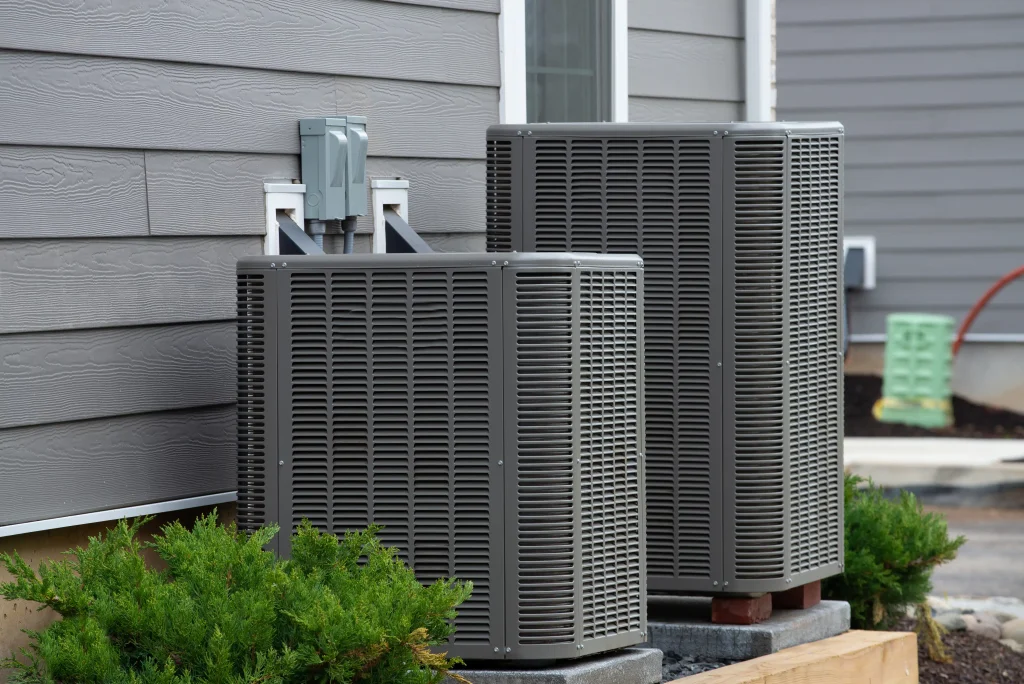
Site requirements are dependable water sources, authorizations, and sediment or biofouling control. Where ground or air options are limited, water-source systems are often a convenient choice. They work well for lakeside homes and can equal or beat geothermal efficiency with cheaper drilling.
Summary of Pros and Cons
- Air-source: Low install cost, widespread availability. Reduced efficiency in extreme heat, may need backup.
- Ground-source: Stable high efficiency, low running cost. High upfront cost and space or drilling required.
- Water-source: High efficiency and lower installation complexity than geothermal in some sites. It is required to have a connection to a compliant water source and servicing.
Installation Matters
Installation Matters Proper installation is the number one key to obtaining expected efficiency and long life from any heat pump. Installation matters. Sizing, siting, ductwork, refrigerant charge, and airflow all interact with climate and building loads. Missed details at this stage manifest as higher energy use, more frequent repairs, and lower comfort at extreme heat.
Installers need to fit system capacity to local cooling load, the building’s thermal envelope, and the owner’s objectives instead of selling the biggest unit or a cookie-cutter approach.
Common installation errors that reduce performance in extreme heat
Wrong sizing is common. An oversized unit cycles on and off and cannot dehumidify properly, while an undersized unit runs continuously and cannot meet peak cooling demand. Installation is what really matters.
Bad ductwork, such as leaks, undersized runs, or bad routing, restricts airflow and makes the system labor more under high outdoor temperatures. Not enough fresh air around outdoor units increases condensing pressure and decreases capacity.
Other common issues are incorrect refrigerant charge, poor refrigerant line insulation, and improper electrical supply or controls. In ground-source systems, for example, loop length or trench depth errors, with usual trench depth between 1.0 to 1.8 meters, or improper borehole placement, which should be 150 millimeters in diameter for drilled holes, will constrain heat exchange and reduce expected longevity.
Hiring experienced installers and climate-specific considerations
Installation does indeed matter, so be sure to pick contractors who have prior experience with heat pumps and especially your local climate. An installer should know the unit’s minimum operating temperature and when to suggest supplemental heating.
Most air-source installs still require a backup heat source for the coldest days, and an installer should size and integrate that properly. Check references, seek out manufacturer certifications, and request a load calculation, not a rule-of-thumb quote.
With geothermal, verify the installer’s history with loop design. A well-installed ground loop can provide 75 years of use, while poor installation will not only shorten useful life but increase costs.
Post-installation checks and ongoing care
After installation, insist on a checklist: correct refrigerant charge measured by superheat or subcooling, verified airflow at registers, secure duct seals, and thermostat calibration against a reference thermometer.
For air-based equipment, clean or replace filters every three months to promote efficient function. Schedule annual tune-ups with a professional contractor to inspect controls, refrigerant levels, motor bearings, and heat exchanger condition.
Proper commissioning and regular checks catch small faults before they become big losses in efficiency or comfort.
Beyond Efficiency
Heat pumps provide more than impressive seasonal efficiency. They eliminate direct fossil fuel combustion at the point of use, so space and water heating emissions drop immediately. Converting a gas or oil furnace to an electric heat pump cuts household scope 1 emissions when grid power is low-carbon. That matters for meeting climate action goals because many jurisdictions couple heat pump rollouts with grid decarbonization, amplifying the emissions advantage over time.
Heat pumps impact indoor air quality as well. Ductless mini-splits and new ducted systems enable more filtration and bring less combustion byproduct than gas burners inside a home. Electric heat pumps eliminate the flue gases that we had to vent indoors and make it simpler to operate continuous ventilation using heat or energy recovery ventilators. That means it reduces indoor nitrogen dioxide and particulate concentrations, boosting the health of children, seniors, and people with respiratory conditions.
Electrification of heating is a central route away from fossil fuels. Heat pumps move heat rather than generate it, so their COP can be 300% to 500%, which means three to five times as much useful heat per unit of electricity as resistive heating. The highest-efficiency models reach 30.0 EER or higher for cooling, and units rated higher than 9 HSPF2 are considered high-efficiency, with the best coming in around 10.5 HSPF2.
For example, the U.S. Department of Energy established a floor of 14.3 SEER2 for residential air-source split systems in 2023, driving manufacturers to enhance seasonal performance.
Energy bill savings come from this high effective efficiency and from off-peak or time-of-use strategies when combined with smart controls. Normal household bill savings differ by climate and fuel costs, but most homeowners experience significant reductions, particularly when swapping out older combustion systems.
Financial incentives expand affordability: rebates, tax credits, and low-interest loans are common in many countries. For example, check local programs. Some provide point-of-sale rebates or performance-based incentives that can cover a significant percentage of equipment and installation costs.
Heat pumps aid in extreme heat adaptation. They cool efficiently and heat too, so they’re a two-for-one where cooling need increases. New heat pumps are heat wave champs and, despite folklore, still function in cold weather. Cold-climate units continue to operate at −15°F or −20°F, losing perhaps 30% of their capacity.
By focusing on electrification and efficiency, you lower your household carbon footprint and facilitate mitigation of the entire increase in global warming.
Future Outlook
Heat pump technology is going to continue to advance for extreme heat and wide-scale climate changes. Cold-climate designs and air-source engineering will advance to drive performance under both very low and very high ambient temperatures. Manufacturers are optimizing compressor cycles, employing variable-speed drives and enhanced heat exchangers to maintain efficiency when outside air is scorching. A few models still reliably operate down to -26°C.
The same engineering attention will increase their high-temperature boundaries and minimize capacity loss during heat waves. Look for greater adoption of heat pumps for space heating and cooling as units become more resilient and efficient. Heat pumps endure for around 15 to 20 years, so combined with grids that are growing less carbon intensive, they become appreciating climate assets, not one-off solutions.
Advocates point to 20-year scopes as the appropriate context for climate efforts. Haters highlight arguments about short-lived greenhouse gases and different time horizons. The increasing device lifetimes and decreasing grid emissions make heat pumps’ adoption ever more irresistible across policy-relevant timelines. A 2020 study discovered heat pumps reduce both climate and health pollution in every U.S. State, a result that would presumably scale as adoption increases.
Further research will look at refrigerants, smart controls, and renewable integration. Policy moves like the AIM Act of 2020 phase out high-GWP refrigerants like R-410A and drive adoption of lower-GWP options like R-454B and R-32. The researchers suggest tying GWP metrics to defined climate goals rather than an arbitrary window, which can help inform smarter refrigerant decisions.
Smart control systems will balance indoor comfort with grid signals, shifting load to times of more renewable supply. Paired with on-site solar and thermal storage, integration will allow heat pumps to operate when the electricity is cleanest, minimizing lifecycle emissions and optimizing cost efficacy. Homeowners, builders, and policymakers ought to design HVAC upgrades while thinking about future climate models and long-term trends.
Heat pumps instead of new fossil systems avoid emission lock-in for 15 to 30 years and keep housing aligned with a trajectory towards deep decarbonization. Electrification is the path to near-zero emissions when combined with decarbonizing grids. Decision-makers should consider local temperature trends, grid mixes, and equipment lifespans when sizing systems and choosing refrigerants.
Anticipate wider market transformations once norms and motivations converge. Anticipate product lines with improved part-load efficiency, controls that connect to smart home energy systems, and refrigerant standards aligned with climate targets. With better technology and a policy framework that backs lower-carbon electricity, heat pumps will be a core tool in both coping with heat waves and driving lower emissions over the long term.
Conclusion
Heat pumps continue to operate in high heat as long as you choose the proper equipment and install it correctly. Seek out units with demonstrated high-temperature ratings and consistent COP figures. Install outdoor units in shaded areas, utilize secure mounts, and maintain unobstructed airflow. Combine a quality system with intelligent controls and regular maintenance. Add fans, shading, and better insulation so you can cut load now and keep your bills down. Monitor performance with basic meters and observe refrigerant and air flow initially. New models and refrigerants push limits, but solid design and care make the biggest difference.
For quick action, scope out local installers for high-temp models and request actual performance data from previous installations.
Frequently Asked Questions
Can heat pumps keep my home cool during extreme heat?
Yes. Today’s heat pumps with high temperature ratings and variable speed compressors continue to cool in extreme heat. Select units designed for your locale and double-check the manufacturer’s maximum operating temperature.
Do heat pumps lose efficiency as outdoor temperatures rise?
Efficiency decreases a bit in extreme heat. More advanced units with inverter-driven compressors and larger coils diminish that loss. Good sizing and installation keep performance drops minimal.
Which heat pump type works best in very hot climates?
High ambient temperature air-source heat pumps with variable-speed (inverter) compressors or ductless mini-splits perform best. Seek out units that are labeled for high-temperature operation and high SEER ratings.
How does correct installation affect performance in extreme heat?
Critical. A well maintained heat pump with proper airflow, proper refrigerant charge, correct sizing, and quality airflow ductwork will ensure peak efficiency. Bad installation can slash efficiency and reliability when heat waves strike.
Can maintenance improve a heat pump’s performance in heat waves?
Yes. It’s a good idea to regularly clean coils, change filters and have refrigerant checked when needed to help keep your system efficient and reliable in extreme heat. I recommend annual professional tune-ups.
Are there complementary strategies to reduce strain on a heat pump?
Yes. Employ shading, reflective roofs, ceiling fans, and smart thermostats to reduce indoor load. Minimizing solar gain keeps the heat pump from running too much or overheating and maintains efficiency.
How long will heat pumps remain efficient as climate extremes increase?
The tech just gets better. New refrigerants, better compressors, and smarter controls push reliability in hotter climes. Opt for certified, climate-tested units and schedule regular upgrades.